Iceland - South shore and Northern lights
May 18, 2013A magic corner of Europe, the land of fire and ice, blessed with majestic waterfalls and the northern lights - welcome to Iceland! You will be deeply touched by the sheer beauty of it all.
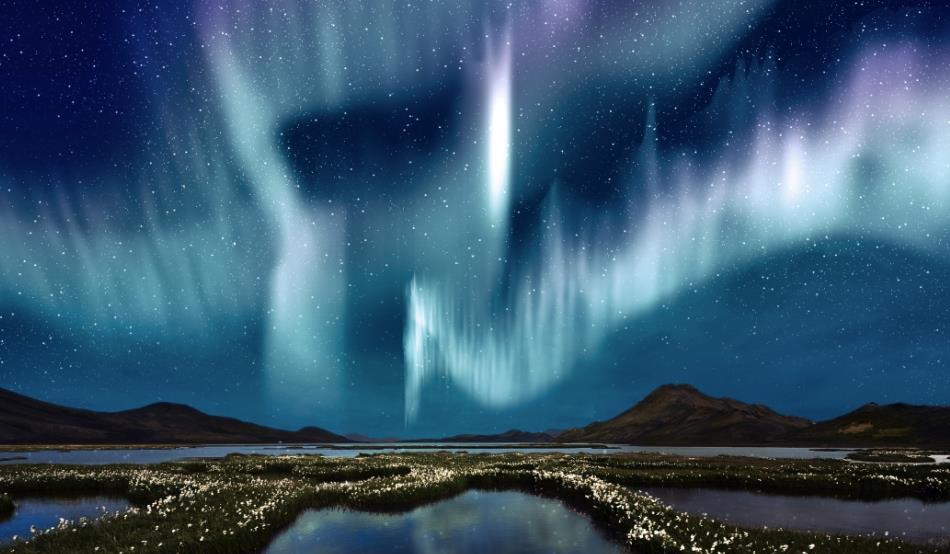
Best time for this trip is the beginning of September - the weather is nice (about 12-15 degrees Celsius) and it's dark at night so you can catch the northern lights if you're lucky.
This is a self-driving tour, so make sure you book your car previous to arrival.
Itinerary
Day one
-arrive in Keflavik airport in the evening
-rent a car from the airport
-check in you Keflavik accommodation
-spend the evening to rest after the long trip and prepare yourself for the amazing following days
This is a self-driving tour, so make sure you book your car previous to arrival.
Itinerary
Day one
-arrive in Keflavik airport in the evening
-rent a car from the airport
-check in you Keflavik accommodation
-spend the evening to rest after the long trip and prepare yourself for the amazing following days
Day two
-today you will drive 440 km (about 5 hours total) from Keflavik to Jokulsarlon - map 1
-visits along the way include: Seljalandsfoss waterfall, Skógafoss waterfall, Dyrhólaey cliffs, Reynisdrangar rocks, Vik black beach, the glacial lagoon of Jokulsarlon
-accommodation in Jokulsarlon area
Day three
-today you will drive 390 km (about 4.5 hours total) from Jokulsarlon to Reykjavik - map 2
-visit: Svartifoss waterfall in Skaftafel national park, the basaltic columns of Dverghamrar, Foss á síðu waterfall, Fjaðrárgljúfur canyon, the Drakkar statue in Reykjavik
-accommodation in Reykjavik
Day four
-today you will drive 280km (about 3.5 hours total) to see the Golden Cicle - map 3
-visit: Hallgrimskirkja - the church symbol of Reykjavik, Gullfoss waterfall, the Geysir, the Blue Lagoon
-accommodation in Reykjavik
Day five
-today you will drive 80km (about 1.5 hours) to reach the Keflavik airport
-in the morning, take a 3 hours cruise to see the whales in the bay of Reykjavik
-catch an evening flight back home

Useful info
-drive only on main roads, as other roads are often on rough terrain and it gets difficult even for SUVs to cross in some areas
-always have a warm coat with you, the weather can change abruptly and it gets very cold in Iceland
-Iceland has a very low crime rate and in general any risks you’ll face while travelling here are related to the unpredictable weather and the geological conditions.
-if you want to see the northern lights go outside of towns or illuminated areas, also you can instal an aurora forecast software on your mobile phone and get daily updates
-Iceland is an expensive country so even additional trips (bought in Reykjavik) would be very expensive, better to discover amazing places on your own
-the Icelandic unit of currency is the króna (Ikr). Almost every town in Iceland has a bank with an ATM, where you can withdraw cash using MasterCard, Visa, Maestro or Cirrus cards.
-visas: The Schengen Agreement means that those from Austria, Belgium, Denmark, Finland, France, Germany, Greece, Italy, Luxembourg, the Netherlands, Norway, Portugal, Spain and Sweden can enter Iceland for up to three months as a tourist with a valid identity card. Citizens of the European Economic Area (EEA), including Ireland and Great Britain, can visit for up to three months on a passport that is valid for at least four months from their date of arrival. Citizens from America, Australia, New Zealand, Japan and Canada can travel in Iceland without a visa for up to three months within any six-month period, with the time limit beginning on the first entry to any Schengen Agreement nation. Other nationalities may need a visa before arriving in Iceland.
Main attractions
-Seljalandsfoss waterfall:
It's located in between Selfoss and Skógafoss at the road crossing of Route 1 (the Ring Road) with the track going into Þórsmörk. This waterfall of the river Seljalandsá drops 60 metres (200 ft) over the cliffs of the former coastline. It is possible to go behind the waterfall.

-Skógafoss waterfall:
It is one of the biggest waterfalls in the country with a width of 25 metres and a drop of 60 m. Due to the amount of spray the waterfall consistently produces, a single or double rainbow is normally visible on sunny days. According to legend, the first Viking settler in the area, Þrasi Þórólfsson, buried a treasure in a cave behind the waterfall. Located near Skogar. Will be featured in Thor 2 the movie.

-Dyrhólaey cliffs:
It's a gigantic black arch of lava standing in the sea, not far from the village Vík.

-Reynisdrangar:
It's a formation of basalt sea stacks situated under the mountain Reynisfjall near the village Vík í Mýrdal, southern Iceland. Legend says that the stacks originated when two trolls dragged a three-masted ship to land unsuccessfully and when daylight broke they became needles of rock.

-Vik:
The village of Vík (or Vík í Mýrdal in full) is the southernmost village in Iceland, located on the main ring road around the island, around 180 km (110 mi) by road SSE of Reykjavík. It has a black volcanic beach with cliffs.

-Jokulsarlon:
It's a large glacial lagoon in southeast Iceland, The lagoon can be seen along Route 1 between Höfn and Skaftafell. It presents a picturesque parade termed as “A ghostly procession of luminous blue ice-bergs". It has been a setting for four Hollywood movies -- A View to a Kill, Die Another Day, Tomb Raider and Batman Begins.

-Svartifoss waterfall:
The Black Fall is a waterfall in Skaftafell National Park in Iceland, and is one of the most popular sights in the park. It is surrounded by dark lava columns.

-Dverghamrar:
Take road no. 1 from Kirkjubæjarklaustur direction Höfn. About 15 km east of Kirkjubæjarklaustur you will see a sign Dverghamrar. “Dwarf Cliffs” are peculiar twin columnar basalt cliffs forming a horseshoe shape in Austur-Síða, just east of the farm Foss down from the Ring Road.

-Foss á síðu waterfall:
It is located along the Ring Road roughly 12km east of Kirkjubæjarklaustur.

-Fjaðrárgljúfur canyon:
It is up to 100 m deep and about 2 kilometres long, with the Fjaðrá river flowing through it. It is located near the Ring Road, not far from the village of Kirkjubæjarklaustur. Take road no. 1 from Selfoss direction Höfn. Just before arriving at Kirkjubæjarklaustur take exit to road no. F206 to Lakagígjar. After few minutes drive the road to Laki leads to the right. Do not take the right turn to Laki instead you should continue the drive for few more minutes until you arrive at Fjaðrárgljúfur.

-Gullfoss waterfall:
Located in the canyon of Hvítá river in southwest Iceland, it is one of the most popular tourist attractions in the country. The average amount of water running over this waterfall is 140 m³/s in the summertime and 80 m³/s in the wintertime. Together with Þingvellir and the geysers of Haukadalur Gullfoss forms the Golden Circle, a popular day tour for tourists in Iceland.

-Geysir:
It is sometimes known as The Great Geysir. Eruptions at Geysir can hurl boiling water up to 70 metres in the air. However, eruptions may be infrequent, and have in the past stopped altogether for years at a time. The nearby geyser Strokkur erupts much more frequently than Geysir, erupting to heights of up to 30 metres every few minutes.

-Blue Lagoon:
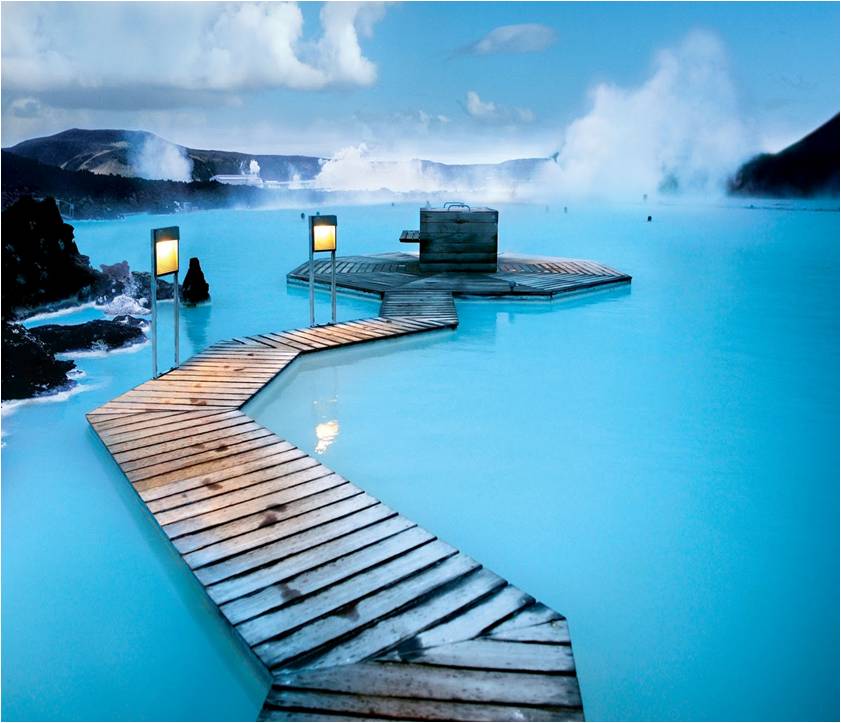
It's a geothermal spa and one of the most visited attractions in Iceland. The spa is located in a lava field in Grindavík on the Reykjanes Peninsula, southwestern Iceland, approximately 13 km from the Keflavík International Airport and 39 km from the capital city of Reykjavík.The warm waters are rich in minerals like silica and sulphur and bathing in the Blue Lagoon is reputed to help some people suffering from skin diseases such as psoriasis. The water temperature in the bathing and swimming area of the lagoon averages 37–39 °C (98–102 °F).
-Reykjavik:
Hallgrimskirkja is a Lutheran parish church. At 74.5 metres its also used as an observation tower. Open from 09am to 09pm.
The harbour offers trips to see the wildlife in the Reykjavik bay: birds and whales.

Maps
To enlarge the maps - right click -> view image
Map 1

Map 2

Map 3

Posted by Ariadna ..